University cycles, fast growth, and Brazos Valley heat
Local SEO in College Station, TX for home-service contractors
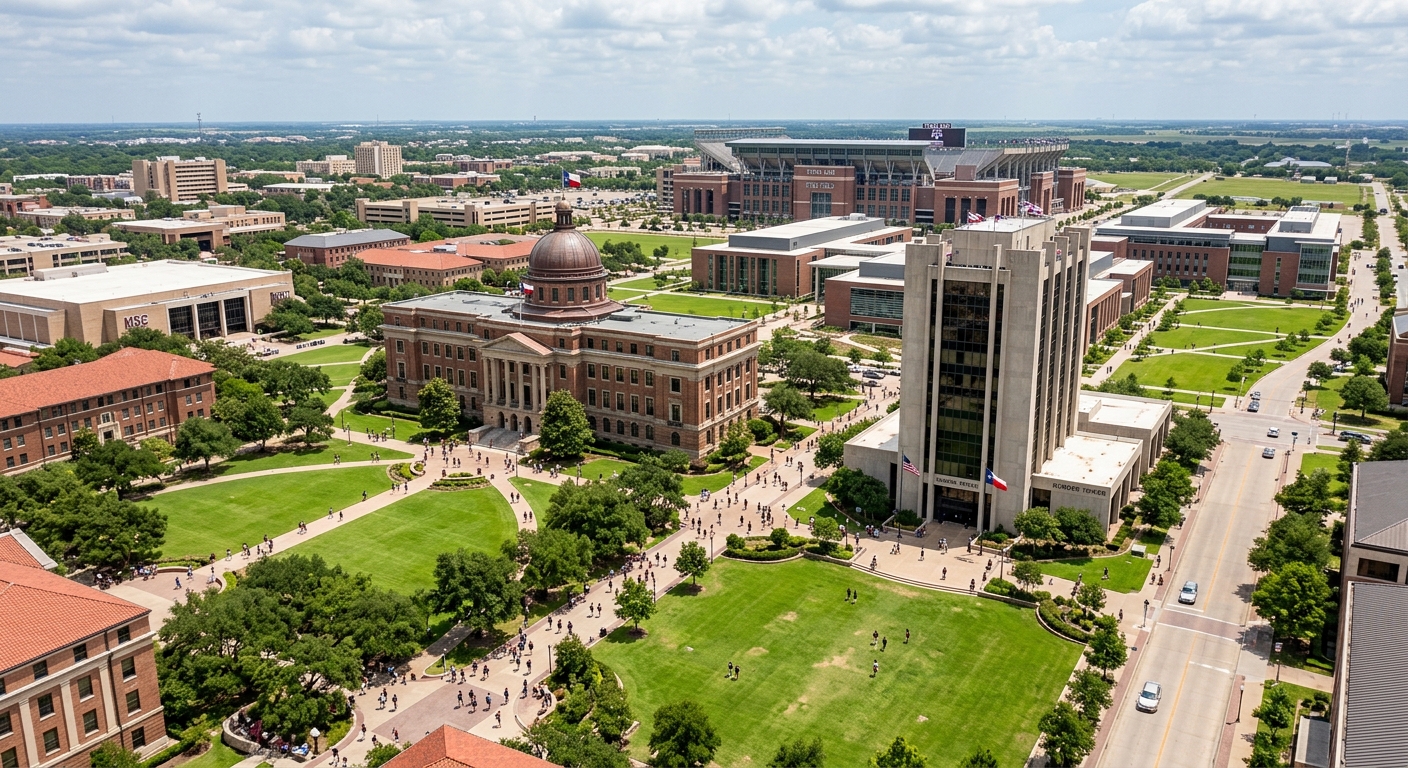
College Station is not a generic metro placeholder. The city’s student apartments, historic cottages, established subdivisions, master-planned communities, and rapidly built housing near the southern edge create distinct service questions, while long hot humid summers, strong thunderstorms, heavy rain, mild winters, and occasional freezing events influence the calendar. SMBify builds the page around those realities for a flat $299 per month per location, with no setup fees and no long-term contract.
Market anatomy
College Station contractor demand starts with the city’s real shape
College Station has a supplied population of 107,889 and works as a university-centered Brazos Valley market. Its contractor market is shaped by higher education, research, health care, technology, construction, hospitality, retail, and university-linked services. The housing mix includes student apartments, historic cottages, established subdivisions, master-planned communities, and rapidly built housing near the southern edge. Those conditions do not prove search volume or lead value, but they explain why one generic metro paragraph cannot answer every homeowner’s question. A useful local SEO plan maps services to real operating boundaries, treats neighborhood names as context rather than decoration, and keeps claims tied to the contractor’s actual work.
Street-level demand
Evidence is stronger when it is tied to a recognizable job context. In College Station, Texas A&M University shapes population and calendar rhythms. That point changes how a plumbing page should be framed around Northgate and the Texas A&M University reference. A useful page should state the service, explain the property or access issue, show genuine evidence when the contractor has it, and give a direct next step. It should not imply that every resident uses the same route or lives in the same housing type. Searchers may begin with a neighborhood, a service, an emergency phrase, or a city-wide query; the page architecture should connect those paths without multiplying thin pages. This work improves controllable signals without promising a map-pack position.
Property and search intent
Seasonal preparation is content work before it becomes emergency work. In College Station, move-in and move-out periods create property-service timing. That point changes how a hvac page should be framed around Southwood Valley and the George Bush Presidential Library and Museum reference. A useful page should state the service, explain the property or access issue, show genuine evidence when the contractor has it, and give a direct next step. It should not imply that every resident uses the same route or lives in the same housing type. Searchers may begin with a neighborhood, a service, an emergency phrase, or a city-wide query; the page architecture should connect those paths without multiplying thin pages. A contractor can then measure qualified calls and forms instead of celebrating impressions alone.
Dispatch reality
A profile can be complete and still be vague. In College Station, football weekends alter traffic without defining normal demand. That point changes how a roofing page should be framed around Castlegate and the Easterwood Airport reference. A useful page should state the service, explain the property or access issue, show genuine evidence when the contractor has it, and give a direct next step. It should not imply that every resident uses the same route or lives in the same housing type. Searchers may begin with a neighborhood, a service, an emergency phrase, or a city-wide query; the page architecture should connect those paths without multiplying thin pages. That is the difference between a local resource and location-name stuffing.
Proof that travels
The strongest pages answer the next question before a caller asks it. In College Station, College Station and Bryan are separate cities in one urban area. That point changes how a tree service page should be framed around Pebble Creek and the Kyle Field reference. A useful page should state the service, explain the property or access issue, show genuine evidence when the contractor has it, and give a direct next step. It should not imply that every resident uses the same route or lives in the same housing type. Searchers may begin with a neighborhood, a service, an emergency phrase, or a city-wide query; the page architecture should connect those paths without multiplying thin pages. Accuracy here protects both rankings and the customer experience.
Seasonal readiness
Coverage language is an operating promise, not a keyword list. In College Station, student rentals require landlord and manager language. That point changes how a dumpster rental page should be framed around Wolf Pen Creek and the State Highway 6 reference. A useful page should state the service, explain the property or access issue, show genuine evidence when the contractor has it, and give a direct next step. It should not imply that every resident uses the same route or lives in the same housing type. Searchers may begin with a neighborhood, a service, an emergency phrase, or a city-wide query; the page architecture should connect those paths without multiplying thin pages. That is more useful than repeating a statewide service paragraph.
Profile integrity
Reporting has to separate visibility from booked work. In College Station, owner-occupied subdivisions need a different proof set. That point changes how a solar page should be framed around Southside Historic District and the University Drive reference. A useful page should state the service, explain the property or access issue, show genuine evidence when the contractor has it, and give a direct next step. It should not imply that every resident uses the same route or lives in the same housing type. Searchers may begin with a neighborhood, a service, an emergency phrase, or a city-wide query; the page architecture should connect those paths without multiplying thin pages. The final boundary should match real crews, real hours, and real services.
Service architecture
A local strategy should survive a busy dispatch day. In College Station, Highway 6, Wellborn Road, and University Drive organize movement. That point changes how a water damage page should be framed around Edelweiss and the Wellborn Road reference. A useful page should state the service, explain the property or access issue, show genuine evidence when the contractor has it, and give a direct next step. It should not imply that every resident uses the same route or lives in the same housing type. Searchers may begin with a neighborhood, a service, an emergency phrase, or a city-wide query; the page architecture should connect those paths without multiplying thin pages. The page should be updated when service scope or coverage changes.
Content decisions
Start with the route, not a slogan. In College Station, cooling reliability is a central household concern. That point changes how a plumbing page should be framed around College Hills and the Research Valley reference. A useful page should state the service, explain the property or access issue, show genuine evidence when the contractor has it, and give a direct next step. It should not imply that every resident uses the same route or lives in the same housing type. Searchers may begin with a neighborhood, a service, an emergency phrase, or a city-wide query; the page architecture should connect those paths without multiplying thin pages. That keeps the page specific without claiming experience SMBify cannot prove.
Review language
The first useful distinction is physical. In College Station, heavy rain makes drainage and roof clarity useful. That point changes how a hvac page should be framed around Eastgate and the Texas A&M University reference. A useful page should state the service, explain the property or access issue, show genuine evidence when the contractor has it, and give a direct next step. It should not imply that every resident uses the same route or lives in the same housing type. Searchers may begin with a neighborhood, a service, an emergency phrase, or a city-wide query; the page architecture should connect those paths without multiplying thin pages. Nothing in that approach requires a fabricated project, review, or local office.
Measurement discipline
Local intent gets clearer when the page names the constraint. In College Station, campus landmarks are not proof of service experience. That point changes how a roofing page should be framed around Wellborn area and the George Bush Presidential Library and Museum reference. A useful page should state the service, explain the property or access issue, show genuine evidence when the contractor has it, and give a direct next step. It should not imply that every resident uses the same route or lives in the same housing type. Searchers may begin with a neighborhood, a service, an emergency phrase, or a city-wide query; the page architecture should connect those paths without multiplying thin pages. It also gives future photographs, reviews, and project notes a truthful place to live.
Commercial and residential split
A practical plan begins with what a crew can actually cover. In College Station, new construction still needs maintenance pathways. That point changes how a tree service page should be framed around Northgate and the Easterwood Airport reference. A useful page should state the service, explain the property or access issue, show genuine evidence when the contractor has it, and give a direct next step. It should not imply that every resident uses the same route or lives in the same housing type. Searchers may begin with a neighborhood, a service, an emergency phrase, or a city-wide query; the page architecture should connect those paths without multiplying thin pages. That discipline matters more than decorative mentions of nearby landmarks.
Conversion details
Search behavior follows property problems more than marketing categories. In College Station, the Wellborn area has a distinct southern-edge identity. That point changes how a dumpster rental page should be framed around Southwood Valley and the Kyle Field reference. A useful page should state the service, explain the property or access issue, show genuine evidence when the contractor has it, and give a direct next step. It should not imply that every resident uses the same route or lives in the same housing type. Searchers may begin with a neighborhood, a service, an emergency phrase, or a city-wide query; the page architecture should connect those paths without multiplying thin pages. Useful specificity is the standard; invented certainty is not.
Coverage boundaries
The map looks simple until streets, boundaries, and building types are added. In College Station, Easterwood Airport and the research corridor add regional context. That point changes how a solar page should be framed around Castlegate and the State Highway 6 reference. A useful page should state the service, explain the property or access issue, show genuine evidence when the contractor has it, and give a direct next step. It should not imply that every resident uses the same route or lives in the same housing type. Searchers may begin with a neighborhood, a service, an emergency phrase, or a city-wide query; the page architecture should connect those paths without multiplying thin pages. The aim is a clearer decision path, not a longer list of place names.
Thirty-day priorities
A city page earns its place by helping a customer decide. In College Station, seasonal content should follow the academic calendar without stereotyping students. That point changes how a water damage page should be framed around Pebble Creek and the University Drive reference. A useful page should state the service, explain the property or access issue, show genuine evidence when the contractor has it, and give a direct next step. It should not imply that every resident uses the same route or lives in the same housing type. Searchers may begin with a neighborhood, a service, an emergency phrase, or a city-wide query; the page architecture should connect those paths without multiplying thin pages. The result should sound like the city because it explains the city.
Action plan
A practical first month for a College Station contractor
For the first thirty days in College Station, begin with the business facts: eligible profile setup, name, phone, website, hours, categories, services, and the exact dispatch boundary. Next, inventory the pages already earning impressions and identify gaps between what the company sells and what the site explains. Then connect one strong College Station hub to the seven relevant trade pathways, repair citation inconsistencies where they matter, organize genuine photographs, and prepare a review process that asks every customer fairly without scripting keywords. The monthly plan is $299 per location, with no setup fee, no long-term contract, and cancellation available anytime.
- Verify the foundation. Confirm profile eligibility, categories, hours, phone, website, and real-world location details.
- Map the offer. Match every priority service to a useful page and remove claims the company cannot support.
- Connect the city. Add neighborhood, route, property, and seasonal context only where it helps a customer decide.
- Publish proof. Use real photographs, fair review requests, and project details that protect customer privacy.
- Measure honestly. Report visibility, actions, calls, and forms without turning correlation into revenue claims.
Roads and entities
Build the service map around routes people actually use
The practical map begins with Texas A&M University, George Bush Presidential Library and Museum, Easterwood Airport, Kyle Field. It continues through State Highway 6, University Drive, Wellborn Road, Research Valley. These entities help a reader understand where the city sits and how crews move, yet none is evidence that a company has completed work nearby. Use them to explain routes, service limits, and property context. Do not turn them into doorway pages. A contractor should publish a boundary that dispatchers can honor on an ordinary weekday as well as during the busiest season.
For platform rules, read Google Business Profile eligibility and representation guidance. For small-business planning resources, visit the U.S. Small Business Administration.
Neighborhood field guide
Ten College Station areas, ten different service contexts
These are real local planning references, not claims of an SMBify office, client, review, or completed project.
Northgate
Searches using Northgate often carry an expectation that the contractor understands the immediate area. The page can meet that expectation by discussing housing, route planning near Easterwood Airport, seasonal timing, and the service scope actually available. Because owner-occupied subdivisions need a different proof set, generic metro copy would hide the useful distinction. Photographs and reviews should be genuine and tied to completed work.
Southwood Valley
Treat Southwood Valley as a service-planning context, not a keyword variation. Around Kyle Field, customers may compare availability, travel, property type, and urgency before they compare marketing claims. Highway 6, wellborn road, and university drive organize movement. A strong section answers those questions, links to the correct trade page, and avoids suggesting experience the company has not earned.
Castlegate
The right content for Castlegate helps a customer decide whether the company fits the job. It can explain the route from State Highway 6, relevant building conditions, normal appointment expectations, and the next action. Cooling reliability is a central household concern. That level of detail is locally useful while staying honest about offices, crews, reviews, and results.
Pebble Creek
Pebble Creek deserves more than a copied city paragraph. A contractor who serves this area can connect the page to nearby movement around University Drive, the relevant housing form, and the exact service offered. Heavy rain makes drainage and roof clarity useful. The copy should state coverage plainly, use real project evidence only when available, and direct the reader to the right service page rather than inventing a local office.
Wolf Pen Creek
For Wolf Pen Creek, start with property context and access. Campus landmarks are not proof of service experience, so a credible landing path should explain dispatch limits, common decision questions, and how the service is delivered. The Wellborn Road reference helps orient the area, but landmarks are not substitutes for proof. Keep the call to action specific and keep every claim verifiable.
Southside Historic District
Searches using Southside Historic District often carry an expectation that the contractor understands the immediate area. The page can meet that expectation by discussing housing, route planning near Research Valley, seasonal timing, and the service scope actually available. Because new construction still needs maintenance pathways, generic metro copy would hide the useful distinction. Photographs and reviews should be genuine and tied to completed work.
Edelweiss
Treat Edelweiss as a service-planning context, not a keyword variation. Around Texas A&M University, customers may compare availability, travel, property type, and urgency before they compare marketing claims. The wellborn area has a distinct southern-edge identity. A strong section answers those questions, links to the correct trade page, and avoids suggesting experience the company has not earned.
College Hills
The right content for College Hills helps a customer decide whether the company fits the job. It can explain the route from George Bush Presidential Library and Museum, relevant building conditions, normal appointment expectations, and the next action. Easterwood airport and the research corridor add regional context. That level of detail is locally useful while staying honest about offices, crews, reviews, and results.
Eastgate
Eastgate deserves more than a copied city paragraph. A contractor who serves this area can connect the page to nearby movement around Easterwood Airport, the relevant housing form, and the exact service offered. Seasonal content should follow the academic calendar without stereotyping students. The copy should state coverage plainly, use real project evidence only when available, and direct the reader to the right service page rather than inventing a local office.
Wellborn area
For Wellborn area, start with property context and access. Texas a&m university shapes population and calendar rhythms, so a credible landing path should explain dispatch limits, common decision questions, and how the service is delivered. The Kyle Field reference helps orient the area, but landmarks are not substitutes for proof. Keep the call to action specific and keep every claim verifiable.
Seven-trade silo
One College Station hub, seven contractor pathways
Each link below leads to a full niche page. The city hub should connect those services without duplicating them.
Local SEO for plumbers in College Station
A College Station campaign for plumbers should turn cooling reliability is a central household concern into decision-useful pages without pretending the condition applies to every property. Build the core service, repair or project pages first; connect them to real neighborhoods only where coverage exists; and use photographs, reviews, licenses, hours, and contact details that belong to the business. The route from discovery to contact should stay short on a phone. Track qualified calls and forms where possible, but never treat a ranking screenshot as proof of revenue.
Local SEO for HVAC companies in College Station
A College Station campaign for HVAC companies should turn campus landmarks are not proof of service experience into decision-useful pages without pretending the condition applies to every property. Build the core service, repair or project pages first; connect them to real neighborhoods only where coverage exists; and use photographs, reviews, licenses, hours, and contact details that belong to the business. The route from discovery to contact should stay short on a phone. Track qualified calls and forms where possible, but never treat a ranking screenshot as proof of revenue.
Local SEO for roofers in College Station
A College Station campaign for roofers should turn the Wellborn area has a distinct southern-edge identity into decision-useful pages without pretending the condition applies to every property. Build the core service, repair or project pages first; connect them to real neighborhoods only where coverage exists; and use photographs, reviews, licenses, hours, and contact details that belong to the business. The route from discovery to contact should stay short on a phone. Track qualified calls and forms where possible, but never treat a ranking screenshot as proof of revenue.
Local SEO for tree services in College Station
A College Station campaign for tree services should turn seasonal content should follow the academic calendar without stereotyping students into decision-useful pages without pretending the condition applies to every property. Build the core service, repair or project pages first; connect them to real neighborhoods only where coverage exists; and use photographs, reviews, licenses, hours, and contact details that belong to the business. The route from discovery to contact should stay short on a phone. Track qualified calls and forms where possible, but never treat a ranking screenshot as proof of revenue.
Local SEO for dumpster rental companies in College Station
A College Station campaign for dumpster rental companies should turn move-in and move-out periods create property-service timing into decision-useful pages without pretending the condition applies to every property. Build the core service, repair or project pages first; connect them to real neighborhoods only where coverage exists; and use photographs, reviews, licenses, hours, and contact details that belong to the business. The route from discovery to contact should stay short on a phone. Track qualified calls and forms where possible, but never treat a ranking screenshot as proof of revenue.
Local SEO for solar companies in College Station
A College Station campaign for solar companies should turn College Station and Bryan are separate cities in one urban area into decision-useful pages without pretending the condition applies to every property. Build the core service, repair or project pages first; connect them to real neighborhoods only where coverage exists; and use photographs, reviews, licenses, hours, and contact details that belong to the business. The route from discovery to contact should stay short on a phone. Track qualified calls and forms where possible, but never treat a ranking screenshot as proof of revenue.
Local SEO for water damage restoration teams in College Station
A College Station campaign for water damage restoration teams should turn owner-occupied subdivisions need a different proof set into decision-useful pages without pretending the condition applies to every property. Build the core service, repair or project pages first; connect them to real neighborhoods only where coverage exists; and use photographs, reviews, licenses, hours, and contact details that belong to the business. The route from discovery to contact should stay short on a phone. Track qualified calls and forms where possible, but never treat a ranking screenshot as proof of revenue.
See the complete local SEO service scope, compare the $299 monthly plan, or review no-contract SEO for contractors.
Seasonal calendar
College Station search demand changes with the weather and the work
Long hot humid summers, strong thunderstorms, heavy rain, mild winters, and occasional freezing events shape planning without guaranteeing leads.
Winter in College Station should organize content around maintenance, cold snaps, indoor comfort, and weather-ready listings. Because cooling reliability is a central household concern, the campaign should review service hours, emergency wording, photos, internal links, and the pages most likely to answer urgent questions. Publish preparation guidance before demand peaks, then keep the profile accurate while crews are busy. Weather may influence searches, but it does not justify a guarantee that a storm, heat wave, or cold event will produce calls. The useful goal is readiness: a customer can see what the contractor does, where the crew travels, what evidence is genuine, and how to ask for help.
Spring in College Station should organize content around storm checks, drainage questions, exterior inspections, and profile cleanup. Because new construction still needs maintenance pathways, the campaign should review service hours, emergency wording, photos, internal links, and the pages most likely to answer urgent questions. Publish preparation guidance before demand peaks, then keep the profile accurate while crews are busy. Weather may influence searches, but it does not justify a guarantee that a storm, heat wave, or cold event will produce calls. The useful goal is readiness: a customer can see what the contractor does, where the crew travels, what evidence is genuine, and how to ask for help.
Summer in College Station should organize content around peak cooling, heat-related urgency, outdoor work, and accurate after-hours language. Because seasonal content should follow the academic calendar without stereotyping students, the campaign should review service hours, emergency wording, photos, internal links, and the pages most likely to answer urgent questions. Publish preparation guidance before demand peaks, then keep the profile accurate while crews are busy. Weather may influence searches, but it does not justify a guarantee that a storm, heat wave, or cold event will produce calls. The useful goal is readiness: a customer can see what the contractor does, where the crew travels, what evidence is genuine, and how to ask for help.
Fall in College Station should organize content around roof and tree preparation, heating checks, cleanup, and next-season planning. Because football weekends alter traffic without defining normal demand, the campaign should review service hours, emergency wording, photos, internal links, and the pages most likely to answer urgent questions. Publish preparation guidance before demand peaks, then keep the profile accurate while crews are busy. Weather may influence searches, but it does not justify a guarantee that a storm, heat wave, or cold event will produce calls. The useful goal is readiness: a customer can see what the contractor does, where the crew travels, what evidence is genuine, and how to ask for help.
Competition landscape
Measure the market from more than one search point
Competition in College Station is not one fixed list. A homeowner’s results can change by block, device, query, proximity, and time. The useful audit therefore checks several points, compares profile categories, reviews the depth of service pages, reads recent review themes, and tests whether contact details are consistent. It does not copy competitors’ wording or present a single screenshot as a city-wide truth. SMBify focuses on controllable work: clearer services, stronger internal links, accurate profile data, useful local context, genuine proof, and measurement that distinguishes attention from qualified opportunities.
Local questions
College Station local SEO FAQ
What does local SEO in College Station include?
SMBify audits the local search foundation, improves Google Business Profile fields the business can truthfully support, strengthens service and location pages, reviews citation consistency, plans internal links, and reports the work. The exact monthly priorities follow the visible gaps and the contractor’s real service area.
How much does SMBify charge for a College Station location?
The plan is $299 per month per location. There is no setup fee and no long-term contract, and the contractor may cancel anytime. The price does not buy a guaranteed ranking or a fabricated volume of leads.
Can SMBify guarantee map-pack rankings in College Station?
No. Google local results depend on relevance, distance, prominence, competition, the searcher’s location, and other factors. SMBify improves controllable signals and measures visibility across meaningful points, but it does not promise a fixed position.
Do I need a separate page for every College Station neighborhood?
No. Create a neighborhood page only when the company truly serves the area and can add useful details about services, access, properties, timing, and evidence. One strong city hub is better than a set of thin pages with names swapped.
Which College Station neighborhoods can this strategy address?
This guide discusses Northgate, Southwood Valley, Castlegate, Pebble Creek, Wolf Pen Creek, and other real local areas as planning references. Coverage on the contractor’s website and Google Business Profile should include only places crews actually serve; the page does not claim SMBify has an office or client in any neighborhood.
How should seasonal demand be handled in College Station?
Plan useful service information before the busiest weather period, then verify hours, availability, and response language as conditions change. Long hot humid summers, strong thunderstorms, heavy rain, mild winters, and occasional freezing events shape likely questions, but weather content should stay calm, accurate, and tied to services the company really performs.
What should a College Station Google Business Profile show?
Use the eligible real-world business setup, correct categories, current hours, a consistent phone and website, genuine services, real photographs, and service areas that match actual operations. Never create a false address or stuff place names into the business name.
How long does local SEO take in College Station?
There is no honest universal deadline. Timing varies with the starting point, competition, website condition, profile history, review base, proximity, and the work completed. Early technical and profile fixes may appear before broader organic or map visibility improves.
How will College Station results be measured?
Reporting should examine local visibility across the real service area, organic entrances to useful pages, Google Business Profile actions, review growth, and qualified calls or forms where tracking is available. Impressions are context, not booked revenue.
Does SMBify work with contractors outside College Station?
Yes. SMBify serves home-service contractors across the United States. Each paid location is $299 per month, and every location should have its own truthful operating details rather than sharing cloned city copy.
Built for the next real decision
Make your College Station pages useful before making them bigger.
SMBify serves US home-service contractors with an honest local SEO scope. The plan is $299 per month per location, with no setup fee, no long-term contract, and cancellation available anytime. The audit identifies the strongest next steps without promising a ranking, lead count, review total, or revenue outcome.